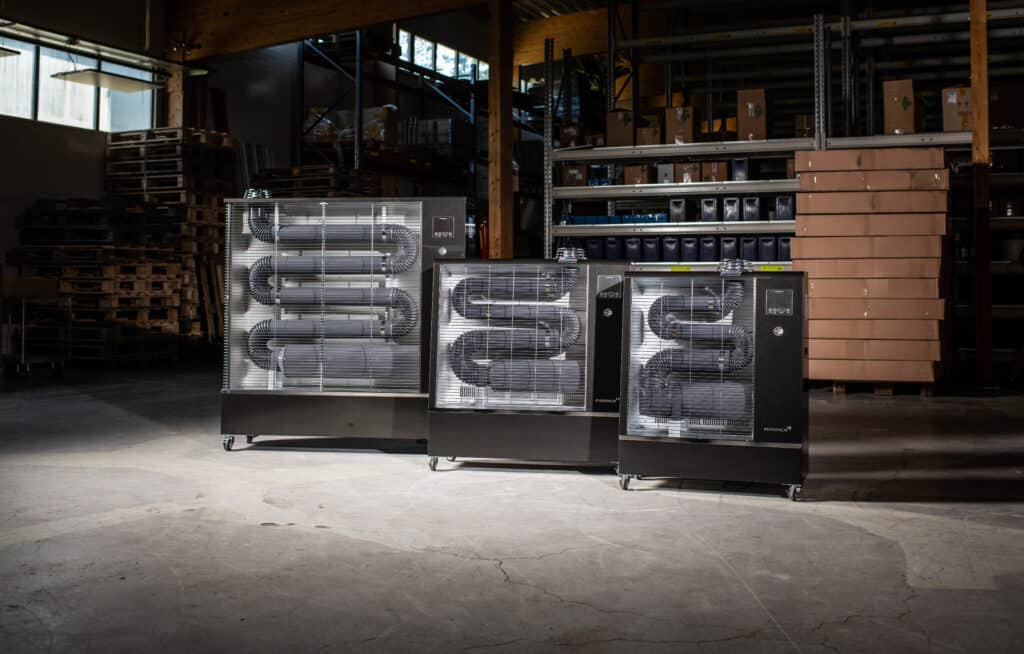
Diesel Heater Maintenance: The Complete UK Servicing & Care Guide
BY OXDALE PRODUCTS
The winter months in the UK can be tough, especially for those working outdoors or in sheds/workshops with minimal insulation. Of course, you might have invested in a diesel heater to keep your workspace warm, but to make that heater last as long as possible, you need to take proper care of it. That’s where proper diesel heater maintenance comes in.
We have put together our own diesel heater maintenance guide, providing practical maintenance advice for agricultural and rural users who use their machines in workshops, sheds or garages. We aim to help prevent breakdowns, extend heater lifespan and improve efficiency during the cold, wetter months in the UK. Join us as we run through some diesel heater maintenance best practices.
Why Diesel Heater Maintenance Matters
There are many reasons to take diesel heater maintenance seriously. The benefits of servicing your diesel heater regularly include reduced carbon build-up, which is caused by incomplete combustion that occurs when short-run cycles happen (you don’t leave the diesel heater running for long enough).
Regularly maintaining your heater will also lead to improved fuel efficiency and more reliable winter performance when compared to a machine you do not regularly maintain. Ultimately, it will save you money in the long-run, reducing your long-term repair costs and extending your heater’s lifespan.
Ideally, and as we will share in this guide, you need to be considering your diesel heater maintenance every time you use your machine. By taking care before, during and after every use, you prolong the life of your machine, improving your return on investment and reducing running costs.
Diesel Heater Maintenance: The Complete UK Servicing & Care Guide 2
Diesel Heater Maintenance Checklist
The easiest way to break down our diesel heater maintenance checklist is to group tasks into what needs to be done before each use, monthly checks and annual service tasks.
Before Each Use
Ensure you are checking your machine thoroughly before each use to not only prevent operating issues, but also as a matter of safety. Before every use:
Inspect fuel lines for leaks. If identified, do not use the heater until fixed.
Check air intake & exhaust for blockages. Remove any found before operating.
Ensure adequate ventilation. Do not use the heater until proper ventilation is sorted.
Listen for unusual start-up noise. Allow the machine to warm up before making judgement.
Monthly Checks
Every month, you should look to clean and maintain various aspects of your diesel heater. This is to prolong the lifespan of your machine. Within your monthly checks should be:
Clean or inspect the air filter. Ensure the filter is not clogged or blocked.
Inspect the glow pin/glow plug. Identify any wear issues and decide if it needs replacing.
Check fuel filter condition. If showing signs of wear and tear, consider replacing.
Inspect electrical connections. Check wiring to ensure there are no loose parts.
Annual Service (or Every 500 Hours)
Your diesel heater annual service is best carried out by a trained professional who can identify and diagnose any potential issues that need addressing. Your service should include:
Clean combustion chamber. This chamber can build up with waste over a year of use.
Replace the fuel filter.
Inspect seals and gaskets. Identify any signs of deterioration and replace where necessary.
Test thermostat and controls. This is important for your safety, investigate and replace if faults arise.
Check fuel pump operation. Investigate and replace if faults arise.
Preventing Diesel Heater Carbon Build-Up
Carbon build-up in diesel heaters can occur for a few reasons, with the most common being running the heater on low output continuously or on short heat cycles. This prevents the diesel heater from complete combustion, leaving carbon to build up. Poor fuel quality can also cause this.
Signs of carbon build-up in your diesel heater include smoke production, reduced heat output and hard starting. While it is not definitive that any of these signs are 100% because of carbon build-up, they are common signs.
In order to prevent carbon build-up in your diesel heater, you should look to run the heater at full temperature periodically. For example, you should run your machine at full temperature once a month, every month. This ensures full combustion. Another way to prevent build-up is to use clean, quality and fresh fuel.
Regular heater servicing will also help you monitor your carbon build-up.
Common Diesel Heater Problems & Warning Signs
Diesel heaters, like any machinery, come with their own set of problems, but most are just signalling it’s time to have your machine serviced. Below are some common warning signs for diesel heaters.
Signs Your Diesel Heater Needs Servicing
Excessive smoke. This is a key sign of carbon build-up in your diesel heater.
Difficulty igniting. This could be caused by a range of issues, including power supply, fuel system, air and exhaust, as well as internal components such as glow plugs.
Weak or inconsistent heat. If your heater is struggling to produce the expected heat, it needs to be serviced.
Unusual knocking or fan noise. A knocking noise could be as simple as a misaligned fan after being moved.
Strong diesel smell. This is likely a leak and should be addressed urgently.
UK-Specific Maintenance Considerations
Running a diesel heater in the UK comes with its own challenges, so you need to make considerations in order to prolong the machine’s lifespan. Rural workshops, barns and sheds are workspaces that face challenges with damp and condensation, so ensuring your heater isn’t stored where it can be affected by this is critical. These issues, along with cold-starts put a strain on components that can cause them to break or wear down quicker than expected.
There are winter-grade diesels out there that are suitable to be used during the colder months, allowing the machine to run more efficiently. However, unless there are periods of extreme cold, you should be fine with generic diesel.
As farmers and smallholders, you’re likely to be only using these machines for 4-6 months a year, so you need to identify a space to store your diesel heater during the other months. Ensure it is elevated, away from standing or running water, as well as in an area with no potential for rodents. They are known to chew through wiring and damage pipes.
Safety Tips When Servicing a Diesel Heater
Before you begin servicing your diesel heater, there are a few safety tips you should comply with to keep your machine compliant as well as yourself safe.
Disconnect power before servicing both at the mains and the switch.
Allow the heater to cool fully before servicing. The machine should be cool to the touch.
Ensure proper ventilation, especially while the heater is still cooling down. There is still a risk of carbon monoxide poisoning if not properly ventilated.
For internal parts assessments and replacements, contact a professional servicing department to book your machine in.
How Often Should You Service a Diesel Heater?
Most diesel heaters should be serviced annually or every 500 operating hours, whichever comes first. Work environments, especially those in agriculture, will likely be using the heater regularly, so servicing will be more frequent.
It is important that you regularly service your machine as it is not only done to prolong the life of your machine, but also to keep you safe. To keep your machine in its best shape, be sure to refer back to our diesel heater maintenance checklist for regular servicing tasks you can carry out.
Diesel Heater Maintenance FAQs
Discover a range of the most commonly asked questions regarding diesel heater maintenance.
How Often Should A Diesel Heater Be Serviced?
Diesel heaters should be serviced annually or every 500 operating hours, whichever comes first.
What Causes Carbon Build-Up In A Diesel Heater?
Carbon build-up in diesel heaters occurs when full combustion is not complete. This happens when you run the machine on low output or short-cycle the machine.
Can I Service A Diesel Heater Myself?
While regular maintenance and checks can be carried out by anyone, the replacement of internal and external parts should be carried out by a professional.
Why Is My Diesel Heater Smoking?
Your diesel heater could be smoking for a variety of reasons, including carbon buildup. A full service will be able to identify any issues with your fuel system, exhaust, air filters and more.
How Long Should A Diesel Heater Last?
A well-maintained and regularly serviced diesel heater should last up to 10 years without needing to be replaced.
Explore Diesel Space Heaters at Oxdale Products
Discover our wide range of industry-leading Airrex diesel heaters available for purchase here at Oxdale Products. Using infrared technology, our diesel heaters are the most fuel and heat-efficient diesel heaters on the market. For more information, get in touch.
To provide the best experiences, we use technologies like cookies to store and/or access device information. Consenting to these technologies will allow us to process data such as browsing behavior or unique IDs on this site. Not consenting or withdrawing consent, may adversely affect certain features and functions.
Functional
Always active
The technical storage or access is strictly necessary for the legitimate purpose of enabling the use of a specific service explicitly requested by the subscriber or user, or for the sole purpose of carrying out the transmission of a communication over an electronic communications network.
Preferences
The technical storage or access is necessary for the legitimate purpose of storing preferences that are not requested by the subscriber or user.
Statistics
The technical storage or access that is used exclusively for statistical purposes.The technical storage or access that is used exclusively for anonymous statistical purposes. Without a subpoena, voluntary compliance on the part of your Internet Service Provider, or additional records from a third party, information stored or retrieved for this purpose alone cannot usually be used to identify you.
Marketing
The technical storage or access is required to create user profiles to send advertising, or to track the user on a website or across several websites for similar marketing purposes.