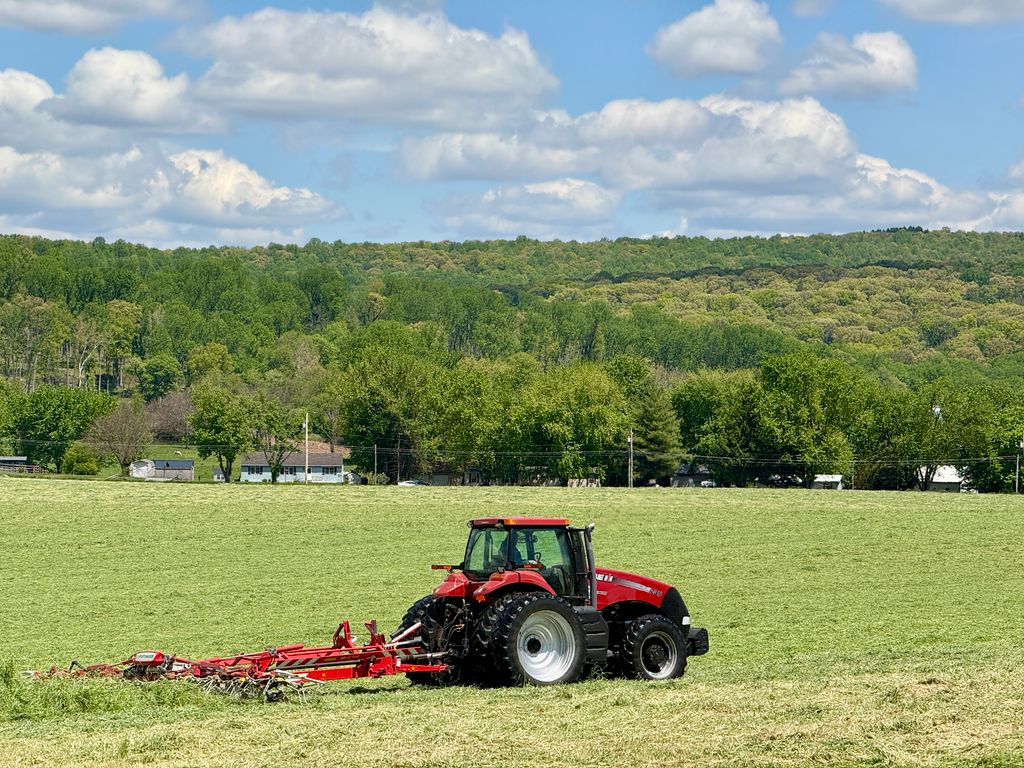
What Agricultural Machinery Do You Need for Paddock Maintenance?
BY OXDALE PRODUCTS
Determining the right agricultural machinery to efficiently carry out your paddock maintenance depends on the current condition of the paddock and the jobs being carried out. While most think that paddock maintenance mainly revolves around grassland maintenance, which it does to a degree, there are other aspects that require a handful of machinery to keep your paddock in good working order.
To build out a reliable paddock maintenance machinery range, you can’t go far wrong with machinery designed for topping, harrowing, rolling and aerating. Join us in this blog as we outline the key agricultural machinery you need for paddock maintenance and how to choose the right one for you.
What Agricultural Machinery Do You Need for Paddock Maintenance? 2
What Machinery Is Used for Paddock Maintenance?
The best paddock maintenance machinery is typically chosen based on how effective it is at its specific job, not purely based on acreage alone. Choosing by acreage can seem like the most efficient choice on the surface, but in some cases it becomes incredibly inefficient.
There are many reasons machinery is used for paddock maintenance, with the main reason being to control grass growth. This is important if you want your land to remain manageable or you’re looking to move livestock into the space.
Machinery is also used to remove thatch and break up surface material, as well as levelling damaged or uneven ground. Along with relieving compacted soil, agricultural machinery is usually used to make the management of your paddock, for whatever reason, easier.
It is important to remember that it only becomes more efficient to use machinery if you take into account the tractor/vehicle compatibility with your chosen attachment.
Toppers for Controlling Grass Growth
A topper is designed to help you with managing grass growth in your paddock. Similar to a traditional mower, a topper’s role is to cut long, rough or ungrazed grass, making your grassland management more reasonable. It is one of the first machines farmers and smallholders purchase for their paddock maintenance. While a topper is similar to a lawn mower, where they differ is that a topper is a practical grassland management solution, which doesn’t leave lawn-like finishes.
When Should You Top a Paddock?
Topping a paddock at the right time comes down to timing. Factoring in grass growth, grazing and field condition is the best way to know when to top your paddock, instead of sticking to a rigid cutting calendar.
Harrows for Removing Thatch and Levelling the Surface
Harrows are handy machines to have when carrying out paddock maintenance. They are designed to work on the surface of your paddock, disturbing dead material, breaking up surface debris and helping level lightly poached areas.
Where harrows vary from model to model is their design and aggressiveness to suit different conditions. Lighter harrows suit those who maintain their paddock regularly, while those who leave it too long may need a more heavy-duty model. This can alter compatibility with towing vehicles, so be sure to check this before purchasing.
Rollers for Levelling Uneven Ground
Should you wish to level your paddock, you’re going to need a roller. They are commonly used to level uneven ground after hoof damage, winter poaching, or other surface disturbance. A good roller will help you firm up ground and make the surface safer to walk or work on.
It is important to remember that if the roller is used at the wrong time, i.e. in the winter or after a heavy downpour, rolling the saturated soil can lead to compaction that ultimately makes drainage harder. Be sure to bear in mind the conditions before rolling.
Aerators for Compacted Grassland
If you’ve carried out paddock maintenance before, you will know how important aeration is for your land. Aerators open up the soil, supporting air and water movement, improving drainage and aiding growth.
Should your land and soil become too compacted, an aerator is a must-have bit of machinery for your paddock maintenance. If you’re seeing signs of poor infiltration or repeatedly trafficked areas, you’re going to want to add an aerator to your collection.
Do You Need Every Piece of Paddock Machinery?
Not necessarily. Choosing the right machinery for your paddock maintenance truly depends on your circumstances. Bearing in mind the acreage will help you determine what size machinery you need; paddock condition and frequency of maintenance will help you determine what machine you need and whether you should purchase or hire. A big factor to consider is the compatibility of the machinery with your current vehicle or tractor set-up. If the appropriate horsepower and linkage aren’t matched, it isn’t the right machine for your current setup.
You also need to consider where you’re going to store your machinery. As is the case with all machinery, they don’t typically fare well when left exposed to the elements, causing issues to arise.
If the paddock maintenance task you’re looking to carry out is infrequent and requires specialist equipment, we recommend outsourcing this task to a specialist who can do the job on your behalf with the correct machinery.
Choosing Machinery for Your Tractor or Smallholding
Before choosing an attachment, make sure it is a good match for both your tractor and the land you are working.
Check the required horsepower, working width, PTO requirements, and whether the machine uses a three-point linkage or towing connection. It is also worth considering the overall machine weight, particularly if you are working on softer ground or with a smaller tractor.
Think about the paddock itself too. Narrow gateways, uneven ground, slopes and limited turning space can all affect which machine is practical to use.
Bigger is not always better. A wider or heavier implement may cover ground more quickly, but on smaller paddocks it can be harder to manoeuvre and may place unnecessary demands on the tractor. In many cases, a correctly matched machine will be easier to use and more effective than simply choosing the largest option available.
Explore some of the most frequently asked questions around paddock maintenance machinery.
What Is the Most Useful Machine for Paddock Maintenance?
For routine grass management, mowing/topping and harrowing are likely to be among the most regularly useful operations, but needs vary by paddock.
Can You Maintain a Paddock With a Compact Tractor?
Many paddock implements are suited to compact or smaller tractors, provided horsepower, linkage, weight and manufacturer requirements are compatible.
What Is the Difference Between Harrowing and Aerating a Paddock?
Harrowing primarily works across or close to the surface, whereas aeration penetrates the soil to address compaction and improve movement of air/water.
Is It Better to Buy Paddock Machinery or Use a Contractor?
Frequently repeated jobs can make ownership worthwhile, while infrequent specialist operations may be more cost-effective to contract out. Be sure to consider acreage, usage frequency and machinery already owned.
Find the Right Machinery for Your Land
Paddock maintenance doesn’t have to be difficult, but you need the right machinery to get the job done. Here at Oxdale Products, our range of agricultural and grassland machinery is designed to make you more efficient. Explore our range today and get in touch if you have any questions about suitability or compatibility.
To provide the best experiences, we use technologies like cookies to store and/or access device information. Consenting to these technologies will allow us to process data such as browsing behavior or unique IDs on this site. Not consenting or withdrawing consent, may adversely affect certain features and functions.
Functional
Always active
The technical storage or access is strictly necessary for the legitimate purpose of enabling the use of a specific service explicitly requested by the subscriber or user, or for the sole purpose of carrying out the transmission of a communication over an electronic communications network.
Preferences
The technical storage or access is necessary for the legitimate purpose of storing preferences that are not requested by the subscriber or user.
Statistics
The technical storage or access that is used exclusively for statistical purposes.The technical storage or access that is used exclusively for anonymous statistical purposes. Without a subpoena, voluntary compliance on the part of your Internet Service Provider, or additional records from a third party, information stored or retrieved for this purpose alone cannot usually be used to identify you.
Marketing
The technical storage or access is required to create user profiles to send advertising, or to track the user on a website or across several websites for similar marketing purposes.